Why Tree Surgery Requires Careful Planning and Specialist Equipment in Godmanchester, Cambridgeshire
Tree surgery involves much more than simply cutting back branches or removing unwanted growth. Every tree has its own structure, condition and surroundings, which means the work must be approached with care. Without proper planning and suitable equipment, even routine pruning can create unnecessary risks or cause lasting damage to the tree.
For property owners in Godmanchester, Cambridgeshire, professional tree surgery helps ensure that maintenance is carried out safely, efficiently and with the tree’s long-term condition in mind. Understanding why preparation and specialist tools matter can help you make informed decisions when arranging tree work.
Why Tree Surgery Must Be Planned Before Work Begins
Before any cutting takes place, the tree needs to be assessed. Its height, shape, branch arrangement and overall condition all influence the work required. A tree with deadwood or damaged limbs may need a different approach from one that simply requires crown thinning or routine pruning.
The surrounding environment must also be considered. Nearby buildings, garden structures, fences, overhead obstacles and access restrictions can affect how branches are removed and lowered to the ground.
Careful planning allows tree surgeons to identify potential difficulties before work starts. It also helps establish the most appropriate sequence of tasks, reducing the likelihood of unnecessary disturbance to the tree or surrounding property.
Understanding the Importance of Specialist Equipment
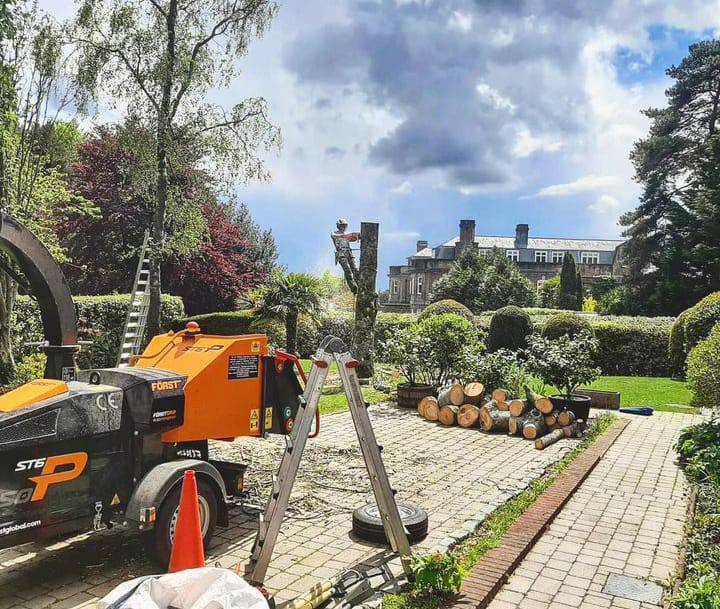
Tree surgery often involves working at height, handling heavy branches and operating in confined spaces. Ordinary garden tools are not suitable for every task, particularly when dealing with mature trees or substantial limbs.
Specialist equipment may include professional chainsaws, climbing systems, harnesses, ropes, lowering devices and suitable protective equipment. Each item has a specific purpose, helping trained tree surgeons carry out different aspects of the work with greater control.
For example, climbing equipment provides access to sections of the canopy that cannot be reached safely from the ground. Ropes and lowering systems can help control the descent of larger branches, particularly where there is limited space below the tree.
Using appropriate equipment is not simply about completing work more quickly. It is essential for maintaining control, protecting the surrounding area and achieving a suitable result.
How Equipment Helps Protect the Tree
Specialist tools also play an important role in preserving tree health. Poor-quality or unsuitable cutting equipment can create rough wounds, tear bark or damage nearby branches. These injuries may interfere with the tree’s natural ability to respond to pruning.
Professional tree surgeons use appropriate cutting techniques and maintained equipment to make clean, controlled cuts. This is particularly important when removing deadwood, reducing a crown or pruning branches that are crossing or rubbing against one another.
The aim should always be to remove the necessary growth while retaining the tree’s natural form and as much healthy structure as possible. Excessive or poorly executed cutting can weaken a tree and encourage undesirable regrowth.
Managing Branch Removal and Surrounding Hazards
One of the most challenging aspects of tree surgery is controlling how branches are removed. Large limbs can be heavy and unpredictable, especially when they are positioned above buildings, garden features or other obstacles.
A planned removal process helps determine whether branches can be lowered using ropes or whether they can be safely cut and brought down in sections. The method chosen depends on the tree’s structure, the size of the branches and the available working space.
This is where experience and specialist equipment work together. Careful handling helps reduce the risk of damage to surrounding areas and allows the work to progress in a controlled manner.
Why Professional Assessment Matters
Different tree surgery tasks require different skills and preparation. Crown reduction, crown thinning, deadwood removal and complete tree removal each involve specific considerations. Choosing the wrong technique can affect the tree’s appearance, stability and future growth.
A professional assessment helps identify the actual requirements rather than relying on unnecessary cutting. It also allows the tree surgeon to consider its condition, growth pattern and position before recommending suitable work.
Godmanchester Tree Surgeons can assess trees and determine the appropriate approach for each situation. Whether a tree needs routine maintenance or more involved work, careful preparation helps ensure that the task is carried out with attention to both safety and tree health.
Conclusion
Tree surgery requires careful planning because every tree and working environment presents different challenges. Specialist equipment, appropriate cutting techniques and a thorough assessment all contribute to controlled work and better long-term results.
For homeowners in Godmanchester, Cambridgeshire, choosing professional tree surgery helps ensure that trees receive the attention they need without unnecessary damage to their structure or surroundings. If you have a tree that requires maintenance or specialist attention, contact Godmanchester Tree Surgeons to discuss the most suitable approach.
Call us on: 01480 270 985
Click here to find out more about Godmanchester Tree Surgeons
Click here to complete our contact form and see how we can help with your tree needs.