Emergency Tree Removal: What to Do When a Tree Becomes Dangerous in Godmanchester, Cambridgeshire
Trees contribute to the appearance and character of gardens and outdoor spaces, but severe weather, disease, structural damage and declining health can sometimes make them dangerous. A tree with a split trunk, unstable roots or large hanging branches may pose a risk to people, buildings, vehicles and nearby property.
Knowing how to respond when a tree becomes hazardous can help reduce the risk of injury and further damage. For homeowners in Godmanchester, Cambridgeshire, understanding when to seek emergency tree removal and why professional assessment matters is an important part of responsible tree care.
Godmanchester Tree Surgeons provides professional tree surgery services to help homeowners address dangerous trees safely and efficiently.
What Makes a Tree Dangerous?
Not every damaged or unhealthy tree needs to be removed immediately. However, certain warning signs suggest that a tree may present an immediate safety concern and should be assessed by a qualified tree surgeon.
Common signs of a potentially dangerous tree include:
- A leaning tree: A sudden change in the tree’s angle may indicate root movement or instability, particularly following strong winds or heavy rainfall.
- Cracks in the trunk: Deep splits, fractures or significant cavities can affect the tree’s structural strength.
- Broken or hanging branches: Damaged limbs caught in the canopy may fall without warning, especially during windy conditions.
- Exposed or damaged roots: Uprooted soil, lifted ground or visibly damaged roots can indicate that the tree’s stability has been compromised.
- Falling branches: Repeated branch failure may point to decay, disease or structural weaknesses that require professional attention.
- Severe storm damage: A partially uprooted tree or a damaged trunk can become an urgent hazard, even if some of the tree remains upright.
If you notice any of these signs, avoid approaching the tree to investigate. A professional assessment can help determine whether emergency removal, targeted branch removal or another form of tree surgery is the most appropriate response.
What Should You Do When a Tree Becomes Dangerous?
Your first priority should always be safety. Attempting to cut down or stabilise a dangerous tree without the right equipment and experience can make the situation considerably worse.
Keep People Away from the Area
Move away from the tree and keep children, visitors and pets at a safe distance. If branches are hanging overhead or the tree appears unstable, do not stand beneath it or attempt to remove debris yourself.
Where possible, prevent access to the affected part of the garden or driveway without approaching the hazard.
Look for Immediate Risks
From a safe distance, consider whether the tree is close to a house, garden building, parked vehicle or frequently used pathway. Take note of any visible damage, such as a split trunk or lifted roots, to help explain the situation when contacting a tree surgeon.
If the tree has fallen onto electrical cables, keep well clear and contact the appropriate emergency or utility service. Do not touch the tree or attempt to move branches near power lines.
Contact a Professional Tree Surgeon
Contact Godmanchester Tree Surgeons to discuss the problem and arrange an assessment. Explain what has happened, describe the visible damage and mention whether the tree is leaning, partially uprooted or has broken branches suspended in the canopy.
Providing clear information helps the tree surgeon understand the nature of the hazard and determine the next steps. If there is an immediate threat to life or a serious incident, contact the relevant emergency services first.
Why Emergency Tree Removal Requires Professional Expertise
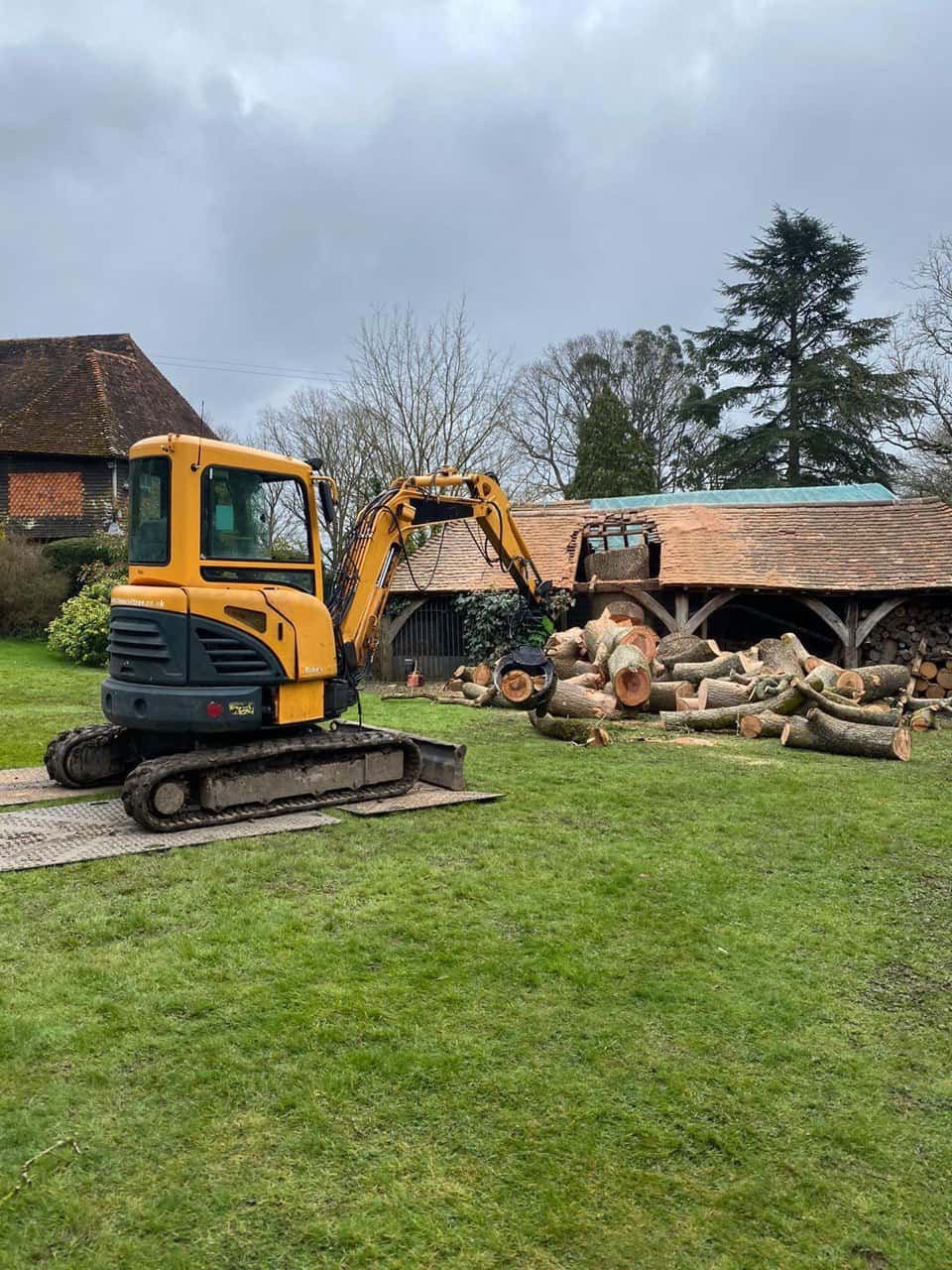
Removing a dangerous tree is more complicated than cutting through its trunk. The tree’s weight, condition, position and surrounding obstacles all influence how it can be dismantled safely.
A professional tree surgeon can assess the stability of the tree, identify weak points and determine the safest working method. Depending on the circumstances, this may involve removing selected branches first, dismantling the tree in controlled sections or felling it where sufficient space and suitable conditions allow.
Specialist equipment and appropriate safety procedures help reduce the risk of falling timber damaging nearby structures or causing injury. Professional experience is particularly important when a tree is close to a building, has a compromised root system or has suffered significant storm damage.
Attempting emergency tree removal as a DIY project can expose people to serious hazards. Chainsaws, heavy branches and unstable trunks require proper training and careful planning.
Can a Damaged Tree Be Saved Instead of Removed?
A tree that looks unhealthy or has suffered damage does not always need to be removed. In some cases, professional pruning or the removal of damaged branches may reduce the immediate risk while allowing the tree to remain in place.
The appropriate solution depends on the extent of the damage, the tree’s overall condition and whether its remaining structure is stable. Minor branch damage may be manageable through targeted pruning, whereas a severely split trunk or extensively disturbed root system may make removal the safer option.
A professional assessment helps distinguish between a tree that needs urgent removal and one that may recover with suitable care. Where removal is necessary, the tree surgeon can explain the reasons for the recommendation and the work involved.
How to Reduce the Risk of Future Tree Emergencies
Although not every tree emergency can be prevented, regular maintenance can help identify developing problems before they become more serious.
Homeowners in Godmanchester can take several practical steps to support safer trees:
- Arrange periodic inspections of mature trees and those with a history of damage.
- Look for dead branches, unusual leaning, trunk cracks and signs of decay from a safe distance.
- Address damaged or overgrown branches through appropriate professional pruning.
- Seek advice after severe weather if a tree shows signs of instability.
- Avoid carrying out heavy pruning or root work without understanding how it may affect the tree’s health and structure.
Routine tree care is not a guarantee against storm damage, but it can help identify concerns earlier and support informed decisions about maintenance.
Choosing Godmanchester Tree Surgeons for Emergency Tree Removal
When a tree becomes dangerous, a prompt and considered response can help protect people and property. Godmanchester Tree Surgeons can assess hazardous trees and advise on suitable tree surgery, including emergency tree removal where necessary.
Every situation is different, so the recommended approach should reflect the tree’s condition, its surroundings and the level of risk. Clear advice and careful planning are essential when dealing with damaged or unstable trees.
Conclusion
A dangerous tree should never be ignored, particularly when it shows signs of root instability, trunk damage or broken branches that could fall without warning. Keeping people away from the affected area and seeking professional advice are important first steps towards managing the risk safely.
For homeowners in Godmanchester, Cambridgeshire, Godmanchester Tree Surgeons can help assess hazardous trees and determine whether emergency tree removal or an alternative tree care solution is appropriate. If you are concerned about the condition of a tree on your property, get in touch to discuss the situation and arrange professional assistance.
Call us on: 01480 270 985
Click here to find out more about Godmanchester Tree Surgeons
Click here to complete our contact form and see how we can help with your tree needs.